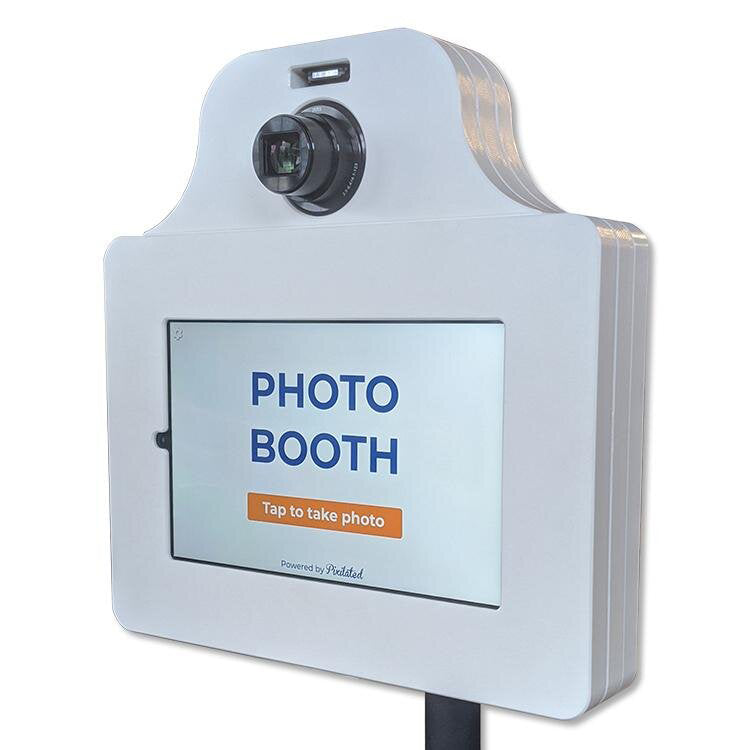
Photo Booth Purchase Guide: What to Know Before Buying
Pixilated Photo BoothDeciding to make a photo booth purchase represents a significant investment that can transform your business operations or event offerings. Whether you're an entrepreneur looking to launch a new venture, a venue owner seeking to add value to your space, or an event planner wanting to bring services in-house, understanding the nuances of buying versus renting photo booth equipment is essential for making the right choice. The landscape of photo booth technology has evolved dramatically, with modern solutions offering everything from instant social sharing to customizable branding options that create memorable experiences for guests while generating revenue for operators.
Understanding the Financial Commitment
Making a photo booth purchase requires careful evaluation of upfront costs and long-term financial implications. Professional-grade equipment typically ranges from $3,000 to $15,000 depending on features, brand, and included accessories.
Initial Investment Breakdown
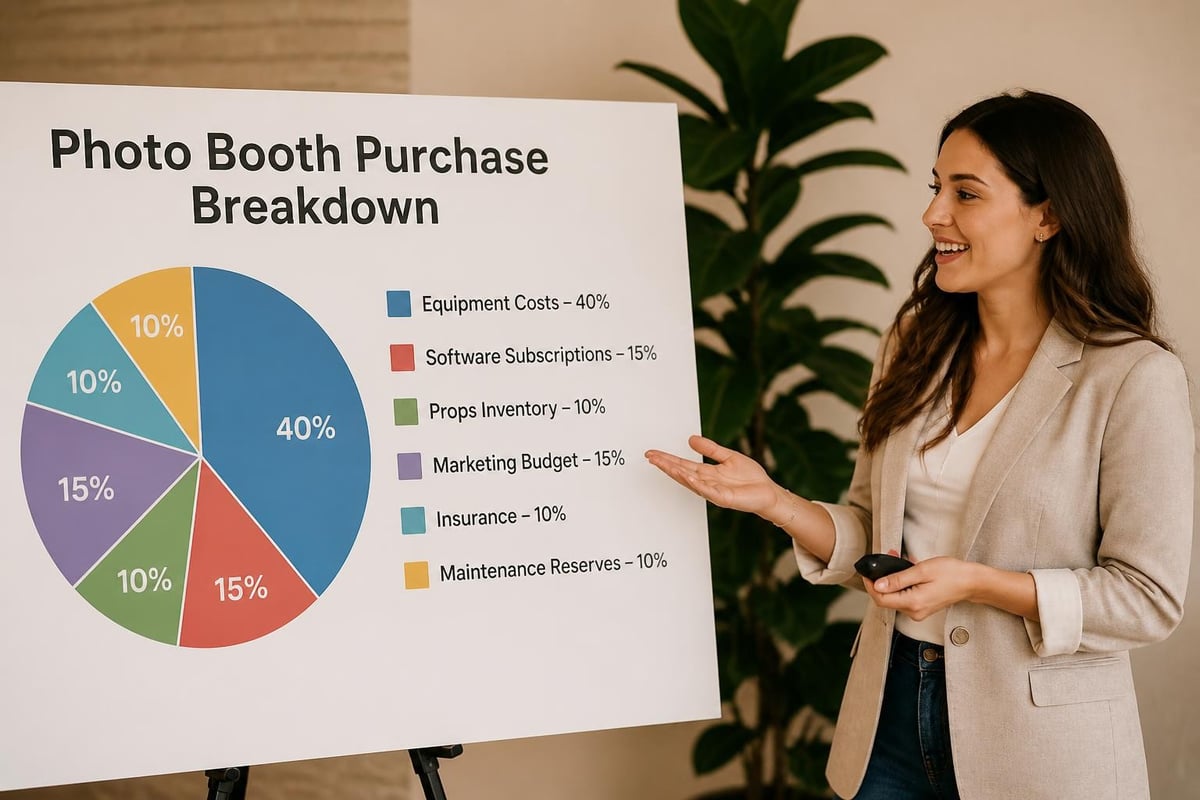
The total cost of a photo booth purchase extends beyond the hardware itself. You'll need to budget for several key components:
- Core equipment (camera, tablet, printer, lighting)
- Software licenses and ongoing subscription fees
- Props and backdrops for variety
- Transportation cases and protective gear
- Marketing materials and branding
Additional costs include insurance coverage, maintenance supplies, and replacement parts inventory. Many first-time buyers underestimate these supplementary expenses, which can add 20-30% to the initial investment. Understanding photo booth costs helps set realistic budget expectations before committing to a purchase.
Analyzing Return on Investment
ROI calculations for photo booth businesses vary significantly based on your operational model and market positioning. Operators who focus on high-volume events can recoup their investment within 10-15 bookings, while those targeting premium corporate clients may need fewer events at higher price points.
| Business Model | Average Booking Fee | Bookings to Break Even | Timeline |
|---|---|---|---|
| Wedding Focus | $800-1,200 | 8-12 events | 6-9 months |
| Corporate Events | $1,500-3,000 | 4-7 events | 4-6 months |
| Venue Partnership | $400-700 (revenue share) | 15-20 events | 8-12 months |
| Party Rentals | $300-600 | 12-18 events | 8-10 months |
The key to maximizing ROI lies in understanding your target market and pricing strategy. Operators who specialize in specific niches often command premium rates while reducing competition.
Equipment Selection Considerations
Not all photo booth systems are created equal, and your photo booth purchase decision should align with your intended use cases and operational requirements.
Technology Platform Options
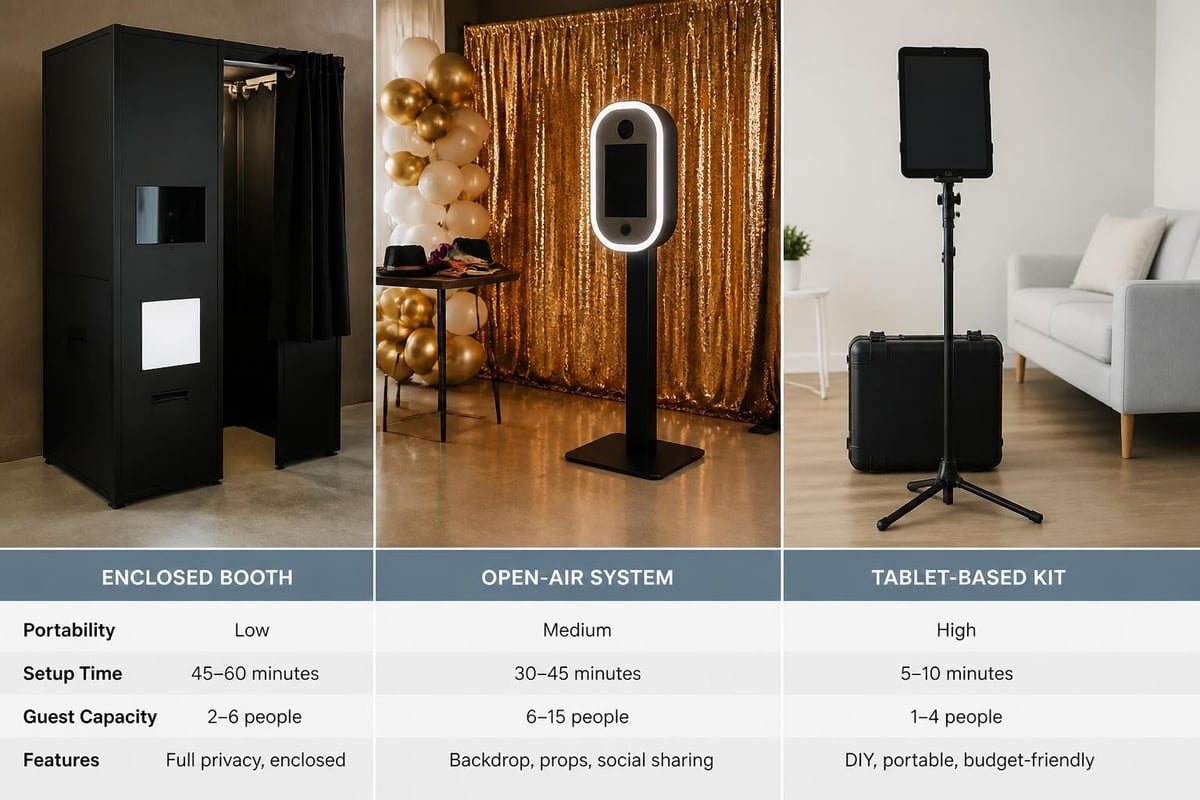
Three primary technology platforms dominate the market:
Enclosed booths offer classic appeal and privacy but require more storage and transportation logistics. These traditional units work well for venues with dedicated space and operators focusing on nostalgia-driven events.
Open-air systems provide flexibility and accommodate larger groups, making them ideal for corporate events and weddings where space varies. These setups typically cost less and offer easier transportation.
DIY tablet-based kits represent the most affordable entry point and offer surprising professional capabilities. Modern software solutions have eliminated many quality gaps between expensive enclosed booths and tablet-based alternatives.
Each platform presents distinct advantages for different business models. Photo booth rental operations often maintain multiple system types to serve diverse client needs.
Essential Features and Capabilities
Your photo booth purchase should include these critical features:
- Instant sharing via email, text, and social media
- Customizable templates for branding and personalization
- High-resolution output for both digital and printed formats
- User-friendly interface requiring minimal guest instruction
- Reliable technical support from the manufacturer
Advanced features like GIF creation, boomerang videos, green screen capabilities, and data collection tools add value but increase complexity and cost. Evaluate whether your target market will utilize and appreciate these premium features before investing.
Ownership Versus Alternative Models
A photo booth purchase isn't the only path to accessing this equipment for your events or business. Understanding alternative approaches helps you make the most informed decision.
When Purchasing Makes Sense
Buying equipment becomes financially advantageous when you anticipate regular usage. Entrepreneurs planning to launch a photo booth rental business, venues hosting frequent events, or marketing teams executing multiple activations annually will benefit from ownership.
Calculate your expected annual usage. If you'll need a photo booth for more than six events per year, the profitability analysis for photo booth businesses suggests ownership typically provides better value than repeated rentals.
Strategic Rental Advantages
Renting offers compelling benefits for occasional users:
- Zero maintenance responsibilities or equipment depreciation
- Access to latest technology without capital investment
- Flexibility to choose different booth styles for different events
- No storage requirements between events
- Insurance and technical support included
Organizations hosting annual conferences, companies planning quarterly celebrations, or individuals organizing wedding celebrations often find rental more economical than ownership.
Hybrid Approaches
Some businesses adopt hybrid models, owning basic equipment while renting specialized setups for specific client requests. This approach minimizes capital requirements while maintaining the flexibility to serve diverse needs.
Building a Sustainable Business Model
If your photo booth purchase aims to generate revenue, understanding viable business models ensures long-term success.
Revenue Stream Diversification
Successful operators rarely depend on a single market segment. Various photo booth business models demonstrate how diversification creates stability:
Direct event bookings provide the foundation for most operators. Marketing to engaged couples, corporate event planners, and party hosts generates consistent demand throughout the year.
Venue partnerships offer regular placement in restaurants, bowling alleys, malls, and entertainment centers. Revenue-sharing arrangements provide passive income with minimal marketing effort.
Brand activations connect you with marketing agencies seeking experiential campaigns. These high-value projects often include custom branding requirements and premium pricing.
School and university contracts deliver bulk bookings for proms, graduations, and campus events. Educational institutions appreciate reliable vendors who understand their unique requirements.
Operational Efficiency Strategies
Maximizing profitability requires more than booking events. Consider these operational factors:
Scheduling efficiency determines how many events you can service weekly. Operators who master logistics can handle multiple bookings per weekend, dramatically improving revenue potential without proportional cost increases.
Automation reduces labor costs through self-service booth operation. Modern photo booth software manages guest interactions, eliminating the need for constant attendant supervision.
Strategic pricing reflects both market positioning and operational costs. Detailed photo booth pricing strategies help operators establish competitive yet profitable rate structures.
Marketing Your Photo Booth Services
A photo booth purchase alone doesn't guarantee bookings. Effective marketing transforms equipment investment into revenue-generating assets.
Digital Marketing Foundations
Building an online presence establishes credibility and attracts inquiries:
- Professional website showcasing booth capabilities and past events
- Social media galleries featuring real client photos and testimonials
- Search engine optimization targeting local event-related keywords
- Google Business Profile maximizing local discovery
- Email marketing campaigns nurturing leads through the booking process
Client testimonials and event photos serve as your most powerful marketing assets. Every event generates content that attracts future bookings.
Networking and Partnerships
Strategic relationships multiply your marketing reach without proportional budget increases. Connect with:
Wedding planners and coordinators who recommend vendors to their clients. These relationships provide steady referral streams if you deliver consistent quality.
Corporate event planners seeking reliable vendors for company celebrations and team-building activities. Business clients often book with less price sensitivity than consumer markets.
Venue managers who maintain preferred vendor lists. Getting recommended by popular event spaces provides built-in credibility with prospective clients.
Customization as a Competitive Advantage
Offering branded experiences differentiates your service from competitors. Customized design options allow clients to incorporate logos, monograms, and themed graphics that align perfectly with their event aesthetics. Corporate clients particularly value this capability for brand activations and employee events, while couples appreciate personalized wedding monograms that make their celebration unique.

Operational Planning and Logistics
Successful photo booth operation extends beyond equipment acquisition. Developing robust operational processes ensures consistent service delivery.
Setup and Strike Procedures
Efficient setup minimizes event disruption and maximizes your daily capacity. Document step-by-step procedures covering:
- Equipment unpacking and assembly sequence
- Power requirements and backup battery protocols
- Network connectivity troubleshooting steps
- Print supply loading and quality checks
- Guest instruction signage placement
Strike (teardown) procedures should be equally detailed, ensuring no components are left behind and equipment is properly secured for transport.
Maintenance and Quality Control
Regular maintenance prevents equipment failures during events:
- Pre-event testing of all components 24 hours before each booking
- Print quality checks using test prints to verify color accuracy
- Software updates scheduled during non-peak periods
- Cleaning protocols for touchscreens, cameras, and external surfaces
- Inventory management tracking props, backdrops, and consumable supplies
Professional operators maintain backup equipment for critical components. Having a spare camera, tablet, and printer prevents catastrophic service failures.
Insurance and Liability Protection
Protecting your photo booth purchase investment requires appropriate coverage:
| Coverage Type | Protection Provided | Annual Cost Range |
|---|---|---|
| Equipment Insurance | Theft, damage, loss | $400-800 |
| General Liability | Guest injury, property damage | $500-1,200 |
| Commercial Auto | Transport accidents | $800-1,500 |
| Professional Liability | Service failures, data breaches | $300-600 |
Many venues require proof of liability insurance before allowing vendor access. Maintaining proper coverage protects both your investment and business viability.
Technology Trends Shaping 2026
The photo booth industry continues evolving rapidly. Understanding current trends helps ensure your photo booth purchase remains relevant.
Artificial Intelligence Integration
AI-powered features are transforming guest experiences. Modern systems offer:
- Automated editing applying filters and enhancements in real-time
- Background removal enabling virtual environments without green screens
- Facial recognition for personalized guest experiences and analytics
- Predictive maintenance alerting operators to potential equipment issues
These capabilities differentiate premium services from basic offerings.
Social Media Optimization
Integration with social platforms has become essential rather than optional. Contemporary photo booths facilitate:
Instant uploads to Instagram, Facebook, and TikTok directly from the booth interface. This immediate sharing extends event reach and provides organic marketing for your services.
Hashtag campaigns that aggregate guest photos under event-specific tags. Brands leverage this capability for measuring activation engagement and reach.
Analytics tracking showing shares, impressions, and engagement metrics. These insights help clients quantify event ROI and demonstrate your service value.
Sustainability Considerations
Environmental consciousness influences purchasing decisions across industries. Photo booth operators are responding through:
- Digital-only options eliminating print waste
- Eco-friendly print materials when physical outputs are desired
- Energy-efficient LED lighting systems
- Recyclable or reusable prop materials
Marketing your sustainability practices resonates with environmentally conscious clients and differentiates your brand.
Scaling Your Photo Booth Business
In-depth profitability analysis reveals that successful operators eventually face capacity constraints. Planning for growth ensures you can capitalize on increasing demand.
Multi-Unit Operations
Expanding from one booth to multiple units requires strategic planning:
Staffing considerations become critical when you can't personally attend every event. Hiring reliable operators who represent your brand professionally determines client satisfaction and referral potential.
Quality control systems ensure consistent service delivery across all bookings. Detailed checklists, training programs, and client feedback mechanisms maintain standards as you scale.
Fleet management tracking equipment location, condition, and utilization rates optimizes resource allocation and identifies profitable expansion opportunities.
Geographic Expansion Strategies
Growing beyond your initial market requires different approaches:
- Franchising models leverage others' capital and effort
- Regional partnerships with local operators sharing resources
- Mobile coverage areas expanding service radius strategically
- Seasonal migration following event demand to different locations
ROI comparisons between small and large operators demonstrate how operational scale influences profitability metrics and business strategies.
Making the Purchase Decision
After evaluating all considerations, finalizing your photo booth purchase involves several tactical steps.
Vendor Selection Criteria
Not all manufacturers provide equal value or support. Evaluate potential suppliers based on:
- Product warranty terms and duration
- Technical support availability and responsiveness
- Software update frequency and feature development
- User community size for peer learning and troubleshooting
- Replacement parts availability and pricing
Request demonstrations and trial periods whenever possible. Hands-on experience reveals usability issues that aren't apparent from marketing materials.
Financing Options
Several paths exist for funding your photo booth purchase:
Cash purchase provides simplest ownership without ongoing obligations but requires significant capital availability.
Equipment financing spreads costs over time while building business credit. Many suppliers offer promotional financing with deferred interest periods.
Business credit cards offer rewards and short-term financing but typically carry higher interest rates than specialized equipment loans.
Lease-to-own programs reduce initial investment while providing upgrade paths as technology evolves.
Essential Accessories and Add-Ons
Budget for critical supplementary items:
- Backdrop stands and fabrics in various colors and styles
- Prop collections appropriate for different event types
- Printer paper and ink maintaining adequate inventory
- Protective transport cases preventing damage during transit
- Signage and instructions guiding guest usage
Starting with versatile basics and expanding based on client requests prevents overinvestment in rarely-used accessories.
Training and Skill Development
Maximizing your photo booth purchase value requires developing both technical and business competencies.
Technical Proficiency
Understanding your equipment capabilities enables better client service:
- Software customization creating branded templates
- Troubleshooting common issues minimizing event disruptions
- Photo editing basics enhancing output quality
- Network configuration ensuring reliable connectivity
- Hardware maintenance extending equipment lifespan
Most manufacturers provide training resources including video tutorials, documentation, and user forums.
Business Skill Requirements
Operating profitably requires capabilities beyond technical knowledge:
Sales skills convert inquiries into bookings through effective communication of value propositions and overcoming objections.
Contract development protects both parties through clear terms addressing delivery, setup, operation duration, and liability.
Customer service excellence generates referrals and repeat business through exceeding client expectations consistently.
Financial management tracking income, expenses, and profitability ensures business sustainability and growth.
Investing in skill development accelerates your path from photo booth purchase to profitable operation. Understanding monthly income potential helps set realistic expectations for new operators entering the market.
Legal and Regulatory Compliance
Operating a photo booth business involves navigating various legal requirements depending on your location and business structure.
Business Structure and Licensing
Establishing proper legal foundations protects personal assets:
- Business registration with state and local authorities
- Employer Identification Number from the IRS
- Sales tax permits for jurisdictions requiring collection
- Business licenses specific to your municipality
- Fictitious business name filing if operating under a DBA
Consulting with legal and tax professionals ensures compliance with applicable regulations.
Privacy and Data Protection
Photo booths collect personal information through email addresses and phone numbers. Compliance requirements include:
Privacy policy disclosure explaining how guest data is collected, used, and protected. This transparency builds trust and satisfies legal requirements.
Data security measures protecting collected information from unauthorized access. Encryption and secure storage prevent breaches that could expose your business to liability.
Opt-in consent for marketing communications sent to event guests. Respecting privacy preferences maintains your reputation and complies with anti-spam regulations.
Making an informed photo booth purchase decision requires balancing financial considerations, business model planning, and operational requirements while staying current with technology trends. Whether you choose ownership or rental depends on your usage frequency, budget constraints, and long-term business goals. Pixilated Photo Booth delivers professional-grade DIY photo booth rentals that let you experience the latest technology without the capital investment, providing everything needed to create memorable, shareable moments at your events with flexible solutions that scale with your needs.