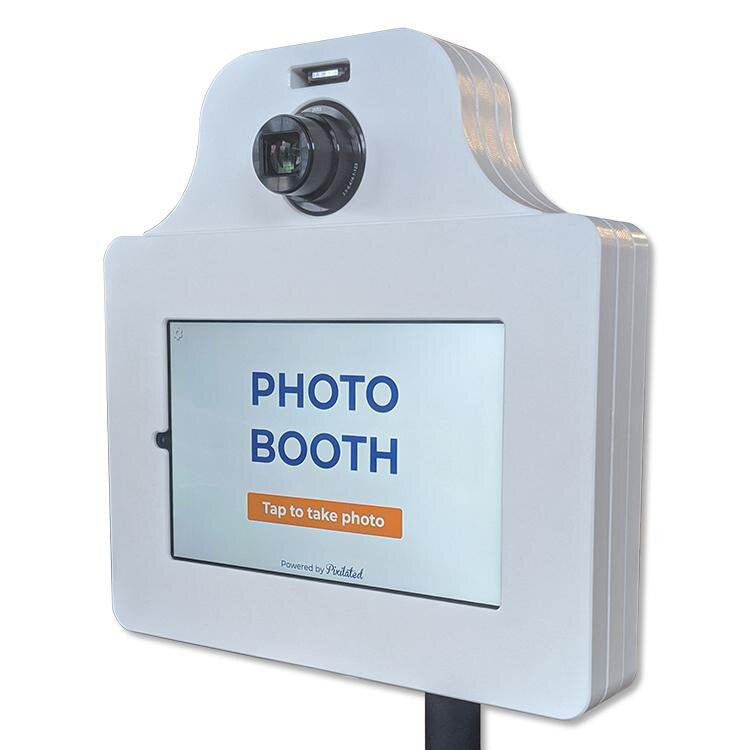
360 Booth vs Selfie Booth: Which Fits Your Event
Pixilated Photo BoothA 360 selfie booth films guests on a rotating platform and produces slow-motion orbit videos, while a classic selfie booth is a compact, self-serve station that captures photos, GIFs or short clips. Choose the 360 format when you want a spectacle with room to spare, and choose the selfie format when space, budget and guest flow matter more.
This comparison covers cost, space, guest throughput, sharing, branding and fit for weddings, corporate events and campus programs, so you can match the booth to your room and your guest list.
360 Booth vs Selfie Booth at a Glance
The table below summarizes how the two formats differ on the factors that most often decide the choice. Figures for 360 booths come from the rental listings cited later in this article. Selfie booth details reflect the self-service format in general.
| Criterion | 360 booth | Selfie booth |
|---|---|---|
| Output | Slow-motion orbit video | Photos, GIFs, short video |
| Guests per session | 1 to 6, depending on platform | 1 to a small group |
| Typical footprint | About 10 x 10 feet or larger | Small tabletop or stand area |
| Power | Often a dedicated circuit | Varies; battery options exist |
| Operator | Usually staffed in rentals | Can be fully self-service |
| Throughput | Varies by operator and setup | Continuous, short sessions |
| Typical cost | Generally higher | Generally lower |
| Best for | Show-stopping moment | Long events, tight rooms |
What Each Booth Actually Does
A 360 booth places guests on a platform while a camera arm or fixed camera captures a full orbit, then edits the clip with slow motion and overlays. A selfie booth uses a tablet or screen on a stand that guests operate themselves.
The 360 experience is built around a performance. Guests pose, dance or stage a group move, and the output is a short video that looks cinematic. The selfie booth is built around speed and repetition. Guests walk up, tap, pose and leave with a photo or GIF in under a minute.
Both formats share a sharing workflow that matters more than the hardware: instant delivery by text or email, plus a gallery. For a deeper look at the self-service side, see Pixilated's guide to the selfie photo booth format.
Cost: What You Pay for a 360 Selfie Booth
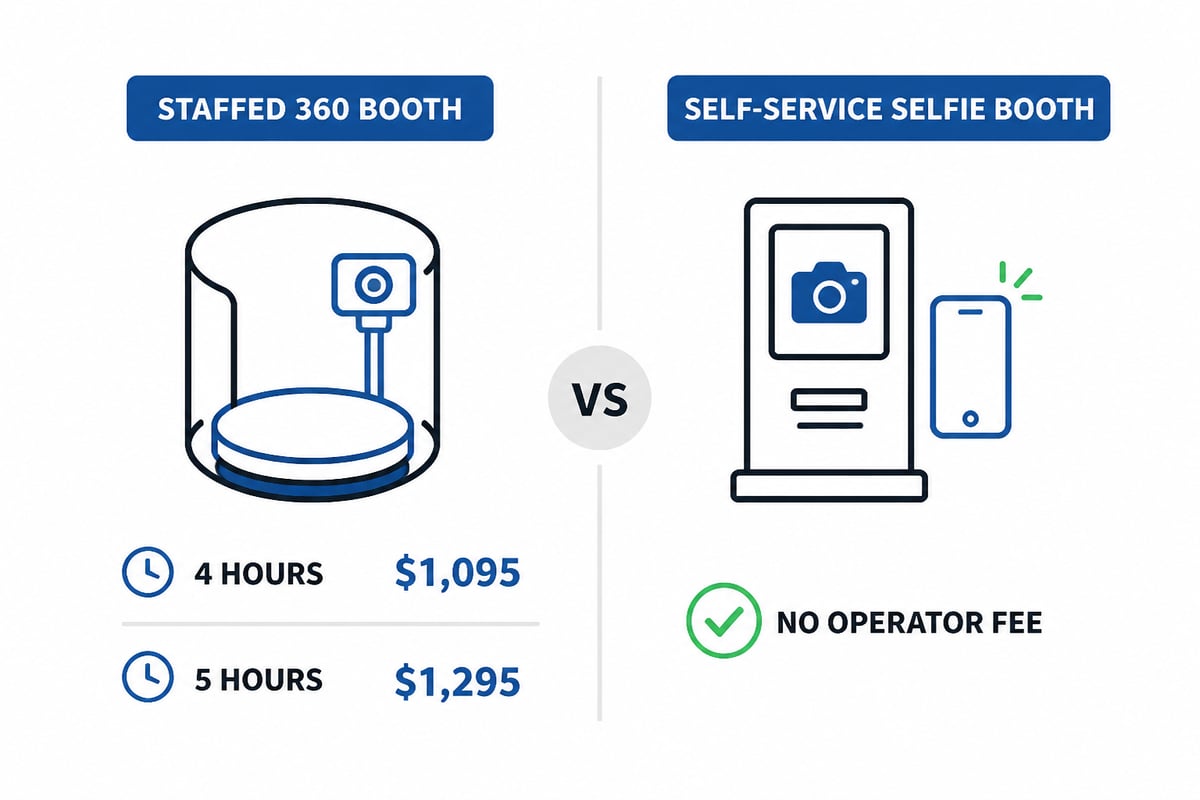
A 360 selfie booth is typically the more expensive option, and prices vary with length and market. A 2026 analysis of about 118,000 booked rentals from Revel.cam reports a $750 median price for 360 booth rentals, with the middle half ranging from $500 to $1,113.
Packages vary widely. The same analysis lists sample 360 packages from $450 for two hours to $1,750 for four hours, with extra-hour rates in its examples running from $150 to $300. As of November 2026, one listed Los Angeles and San Diego provider, Pixster, prices its staffed 360 packages at approximately $1,095 for four hours and $1,295 for five hours, both including unlimited videos, digital overlays, instant sharing and an on-site event team.
Self-service selfie booths generally cost less because there is no operator, no large platform and less transport. If you are weighing budget first, Pixilated's overview of photo booth cost breaks down what drives the price.
Space and Power Requirements
A 360 booth needs a clear footprint of about 10 x 10 feet at minimum, and a selfie booth can fit almost anywhere a small table or stand will go. Space is the criterion that eliminates the most venues.
Listings give a useful range for the 360 format:
- EventFab recommends a 10 x 10-foot footprint.
- Magic Special Events specifies a minimum 10 x 10 x 10-foot area and a 120-volt, 15-amp dedicated circuit.
- Salt Booths describes a 32-inch platform with an 800-pound capacity and says the smallest workable space is 13 x 13 feet.
- Pixster lists a 46-inch stage for 4 to 6 guests, an 11-inch platform height, an 850-pound load capacity and a footprint range of 8 to 16 feet.
Ceiling height and overhead clearance matter too, since a camera arm sweeps above guests. Banquet halls with low ceilings, chandeliers or tight table layouts can rule out a 360 setup entirely.
A selfie booth avoids those constraints. Pixster itself describes its Selfie Station as an iPad-based option for photos, GIFs and short videos, suited to locations with limited space and longer events. Battery-powered self-service kits go further by removing the cord and the outlet question altogether.
Guest Flow and Throughput
A 360 booth moves fewer guests per hour than it appears to, while a selfie booth keeps a steady trickle of short sessions. Throughput is the factor that decides whether everyone gets a turn.
Throughput depends on the operator and setup, so confirm session rates with any vendor you consider. A single 360 booth can be workable for a moderate reception but may strain at a large conference, where lines form quickly.
A selfie booth does not remove lines, but each session is shorter and guests can use it unattended across a long cocktail hour or open house. For events that run many hours with guests drifting in and out, steady availability often beats a single high-impact attraction.
Sharing, Branding and Output
Both formats deliver digital content instantly, so the difference lies in what guests receive and how much you can brand it. A 360 clip is a single video asset. A selfie booth can produce photos, GIFs and clips, often with custom frames.
For a wedding, a branded 360 overlay with the couple's names looks polished on social feeds. For a corporate event, branded frames, screens and backdrops carry a logo into every photo a guest posts. Many 360 rental providers offer enhancements such as digital video overlays, and some offer branded delivery, so check what each package includes.
Self-service kits can match much of this at lower complexity. A themed backdrop and frame, such as a solid photo booth backdrop paired with a custom frame, gives photos a consistent look without an on-site team.
Staffed vs Self-Service Operation
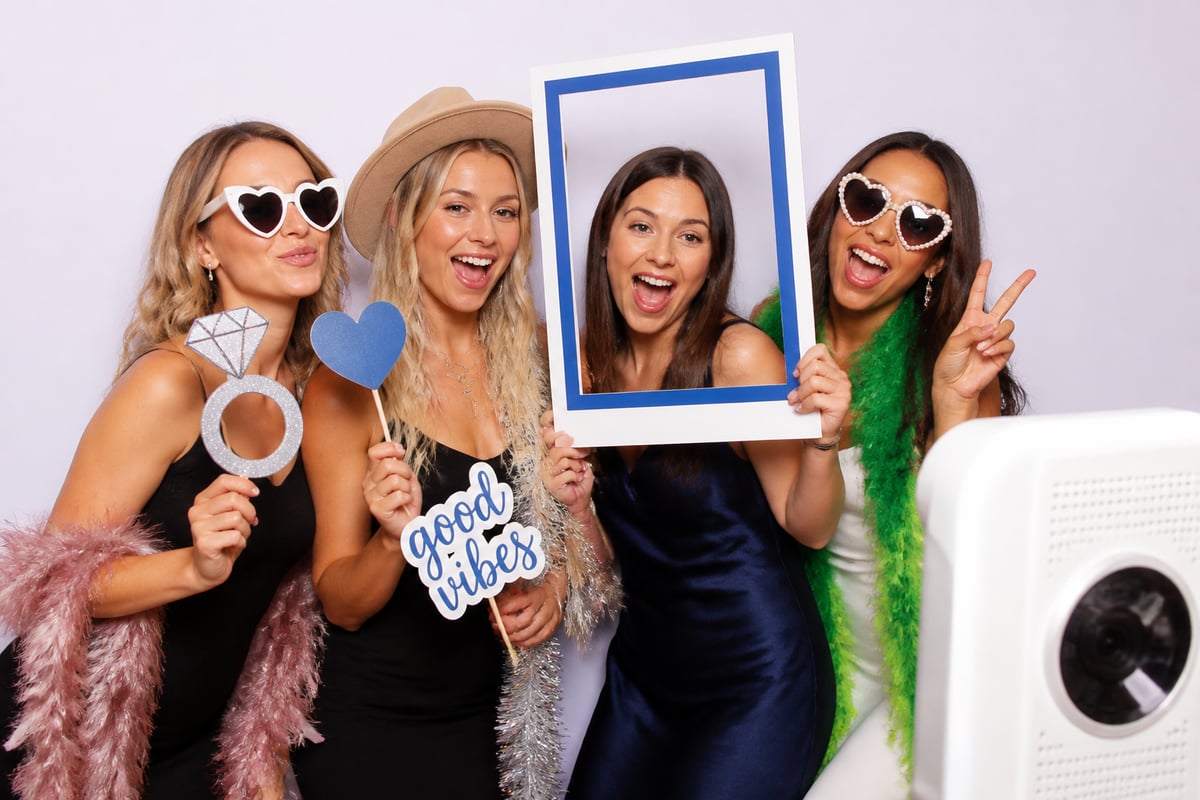
Most 360 rentals come with an operator, and most selfie booths can run without one. Operation affects both your budget and your day-of workload.
A staffed 360 booth means someone coaches guests, manages the platform and edits clips. That coaching raises the quality of the output, but it adds to the price and limits the booth to the rental window. Many 360 packages include an on-site team, delivery, setup and takedown, so confirm the inclusions for each vendor.
A self-service booth shifts that work to the guests and the kit. It suits hosts who prefer to avoid a vendor presence during a ceremony or program. It does not suit hosts who want someone to run the experience, and those hosts are better served by a staffed 360 vendor.
Pixilated Photo Booth: A Self-Service Option
The Pixilated Photo Booth is a self-service kit rather than a 360 platform, and it fits hosts who want a selfie-style experience without an operator or a large footprint.
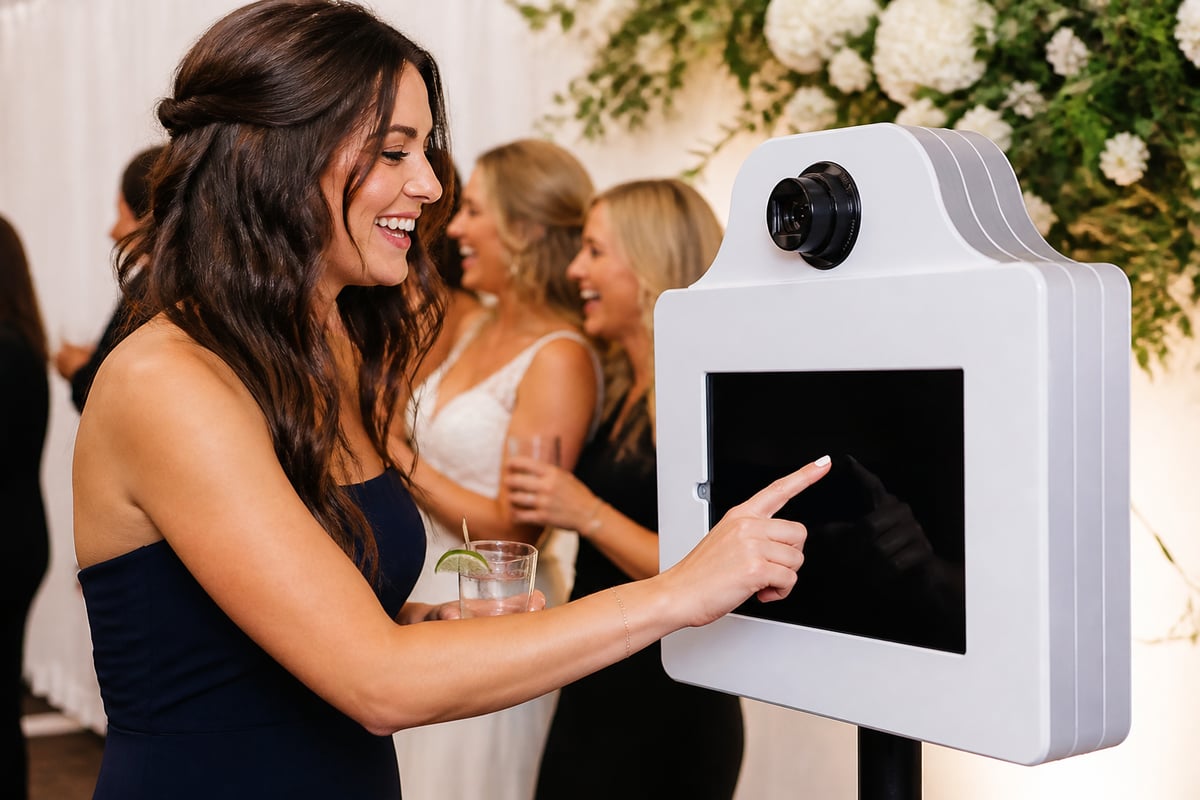
The Pixilated Photo Booth is shipped to you with free roundtrip UPS shipping, and the kit is guaranteed to arrive at least one day before your event. Setup takes about five minutes with no tech skills needed. The booth is battery-powered, so there are no power cords to trip over, which helps in tight venues. Frames, screens and backdrops can be customized with your logo, colors and theme, and photos arrive by text and email with an online gallery of every shot.
Pixilated reports a 4.9/5 rating from 10,000+ event hosts and more than 10,000 events hosted. It does not offer a staffed operator, and free shipping does not apply to Alaska or Hawaii, so it suits hosts in the lower 48 states who are comfortable running the booth themselves. Product details and availability are on the product page.
Which Booth Fits Weddings
For weddings, choose a 360 booth if your reception room has open floor space and you want a showpiece moment, and choose a selfie booth if the room is tight or you want photos available all night.
A 360 booth works well during a dance block or cocktail hour, when guests are energized and ready to perform for a camera. It needs that open footprint, a power plan and typically a vendor on site. A self-service booth fits quietly into a corner and stays available through dinner and late-night hours. Couples who want themed frames and backdrops that match their palette can start from the wedding photo booth bundles.
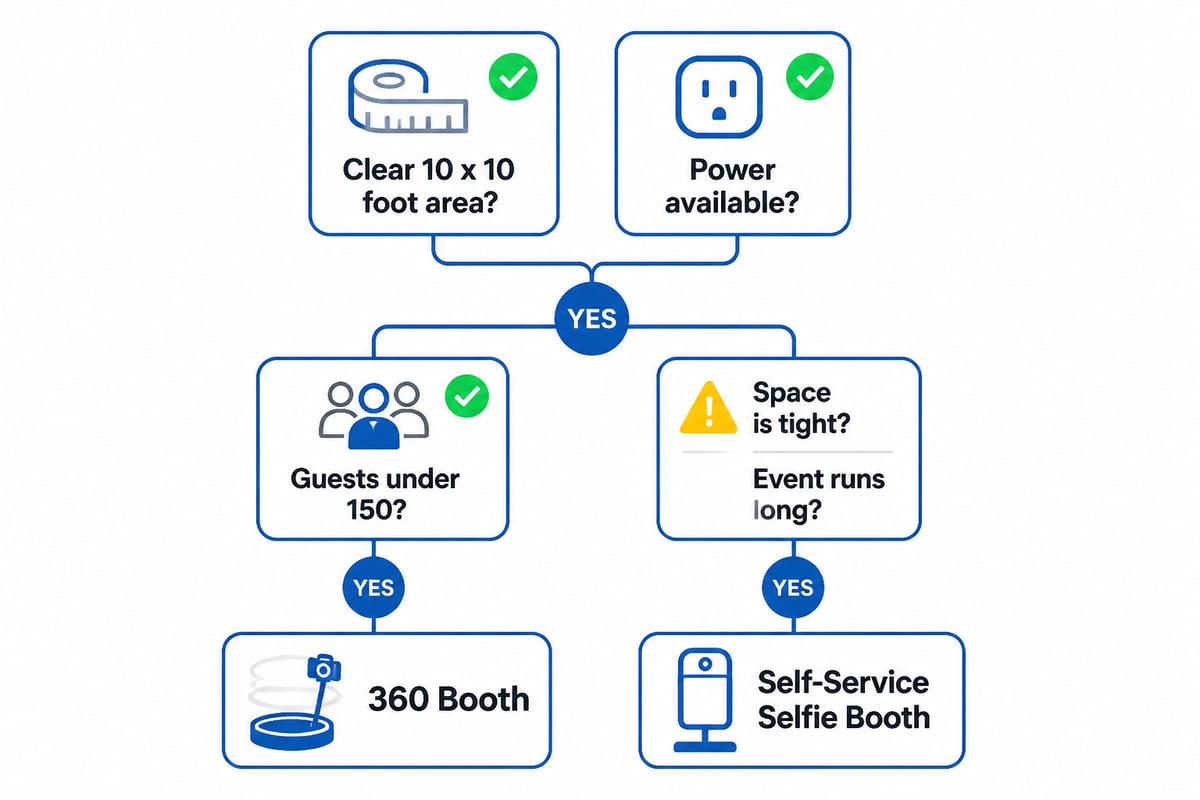
A practical split: if your guest count is under about 150 and the venue has a clear 10 x 10-foot area, a 360 booth is feasible. Above that, or in a ballroom packed with tables, a selfie booth keeps lines shorter.
Which Booth Fits Corporate Events
For corporate events, a 360 booth suits product launches and galas where spectacle drives social posts, while a selfie booth suits conferences and long networking days where guests need constant access.
A brand activation with a stage area can justify the 360 format, since the video becomes shareable marketing content. For a multi-hour conference or an employee celebration, a self-service booth gives teams a casual icebreaker without staffing costs. Pixilated's guide to photo booth ideas for conferences and trade shows covers formats for these settings, and the company holiday party photo booth bundle is a ready-made option for seasonal events.
Which Booth Fits Campus Events
For campus events, a selfie booth usually wins on cost and flexibility, because student groups often work with small budgets, shared spaces and no vendor management time.
Orientations, graduations and student org nights tend to run long with changing crowds, which favors an always-available station. A 360 booth can still anchor a one-night showcase such as a homecoming or formal if the venue has open floor. Pixilated's list of photo booth ideas for college and university events offers formats suited to student programming.
For a broader take on guest experience and layout, Fun Fun Party's comparison of 360 booths and selfie stations covers space, flow and event fit from a rental provider's view.
A Practical Way to Decide
Answer four questions in order and the choice usually becomes clear.
- Do you have a clear 10 x 10-foot area, overhead clearance and power? If not, rule out the 360 format.
- How many guests need a turn? Above roughly 150 guests, a single 360 booth may create long lines.
- How long does the event run? Long events favor the always-on selfie format.
- Do you want a staffed operator? If yes, a 360 vendor fits. If you prefer self-service, a kit fits.
Hypothetical example: a mid-sized reception in a venue with an open dance floor and a wish for a standout moment could reasonably choose a staffed 360 package for a shorter window. A large open house in a narrow lobby with a small budget could choose a battery-powered self-service booth running the full event.
Many hosts combine formats, running a 360 booth for peak hours and a self-service station for the rest. That pairing covers both the spectacle and the steady access, if the budget allows.
Frequently Asked Questions
Is a 360 selfie booth worth the cost?
It is worth it when you have the space and want a memorable attraction that guests will post. Pricing varies, so compare packages by hours, inclusions and staffing before deciding.
How many people fit on a 360 platform?
It depends on the platform. Pixster lists a 46-inch stage for 4 to 6 guests, while Salt Booths recommends up to three guests at once on its 32-inch platform. Confirm capacity with any vendor you consider.
Can a selfie booth work without an operator?
Yes. Self-service booths are designed for guests to run themselves, which suits hosts who want no vendor presence. Hosts who want someone to run the experience should choose a staffed rental instead.
What happens if my venue has a low ceiling?
Low ceilings, chandeliers and tight layouts can limit a 360 booth because the camera arm needs clearance. Measure the area and confirm requirements with the vendor, or choose a compact selfie booth.
Start by measuring your reception area or event room and counting your expected guests, since that single step tells you whether a 360 setup is realistic. If the space is tight, the event runs long or you prefer to run the experience yourself, a self-service kit is the practical choice, and the Pixilated Photo Booth can be customized with your logo, colors and theme and shipped free across the lower 48 states. When you are ready to lock in your date, book my photo booth now and have a kit arriving before your event.