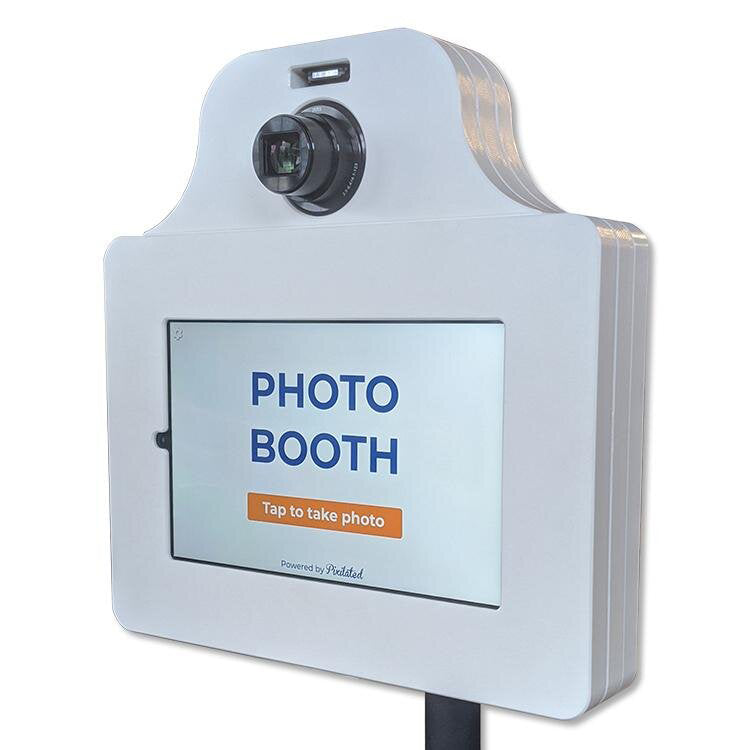
Photo Booth Design: Creating Memorable Event Experiences
Pixilated Photo BoothCreating an exceptional photo booth experience starts with thoughtful design decisions that balance aesthetics, functionality, and user engagement. Whether you're planning a corporate activation, wedding celebration, or brand promotion, the design choices you make will directly impact guest interaction and the quality of shareable moments. Modern photo booth design goes far beyond simply placing a camera in front of a backdrop-it requires strategic planning around space utilization, visual branding, technology integration, and the overall user journey from start to finish.
Understanding the Core Elements of Photo Booth Design
Effective photo booth design requires attention to multiple components working in harmony. The physical layout, digital interface, lighting setup, and branding elements must all align with your event's goals and audience expectations.
Space planning forms the foundation of any successful installation. Consider the footprint required not just for the booth itself, but for the queue area where guests will wait and the exit space where they'll review and share their photos. A typical setup needs between 8x8 feet for compact installations and 10x10 feet for more elaborate configurations with props and multiple shooting angles.
Physical Layout and Flow Optimization
The arrangement of equipment and guest interaction zones significantly affects both the photo quality and overall experience. Position cameras at appropriate heights-typically 5 to 5.5 feet for standing shots-and ensure adequate distance between the camera and backdrop to prevent harsh shadows.
- Backdrop positioning: Place 3-4 feet from the camera to allow proper depth of field
- Lighting placement: Position key lights at 45-degree angles from the subject
- Props station: Designate a clearly marked area within arm's reach but outside the frame
- Exit flow: Create a natural path away from the shooting area to prevent congestion
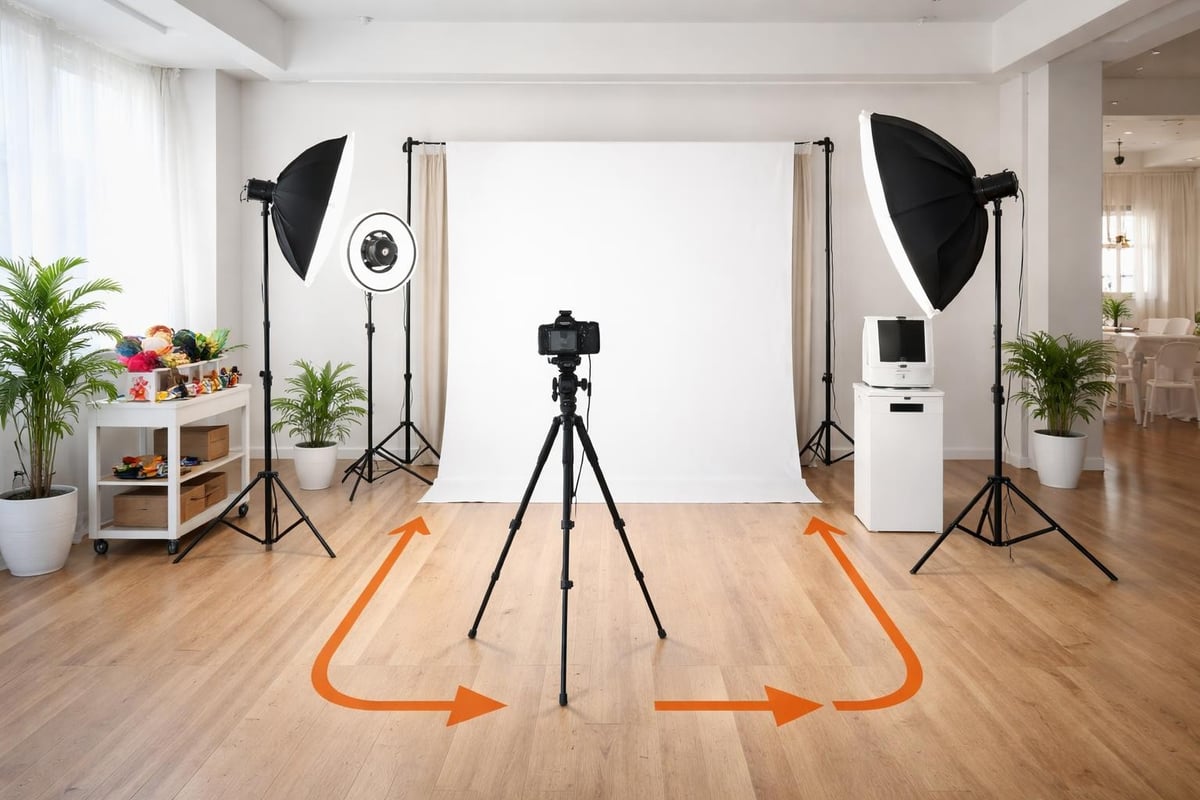
Modern photo booth trends emphasize interactive and customizable features that keep guests engaged throughout the experience. The physical design should facilitate easy interaction with digital controls while maintaining an intuitive flow from capture to sharing.
Branding and Visual Identity Integration
Photo booth design offers exceptional opportunities for brand expression and event theming. Every visual element-from the booth enclosure to the digital interface-should reinforce your brand identity or event aesthetic.
Custom Overlay Design and Templates
Digital overlays represent one of the most powerful branding tools in photo booth design. These graphic elements frame each photo with logos, event hashtags, custom borders, and themed graphics. When designing overlays, maintain a balance between visual interest and space for faces-typically limiting branding elements to 15-20% of the total image area.
| Design Element | Best Practice | Common Pitfall |
|---|---|---|
| Logo placement | Bottom corner, 10% of image height | Oversized logos covering faces |
| Color scheme | Match brand guidelines with high contrast | Low contrast that disappears on prints |
| Typography | Clean, readable fonts at 24pt minimum | Decorative fonts that appear cluttered |
| Event information | Hashtag and date in subtle positioning | Excessive text competing with subjects |
The customization possibilities extend beyond simple logo placement. Many event planners now incorporate innovative photo booth ideas that transform standard setups into immersive brand experiences aligned with specific themes or campaign messages.
For clients seeking personalized touches, a customized design service allows you to seamlessly integrate logos, monograms, or thematic elements directly into the photo experience. This transforms each captured moment into a branded keepsake that extends your message long after the event concludes.

Backdrop Selection and Theming
The backdrop serves as the canvas for your photo booth design. Choose materials and patterns that complement lighting while supporting your aesthetic goals. Sequined backdrops create glamorous, eye-catching results but require careful lighting to prevent hot spots. Matte fabric backgrounds offer versatility and professional results across various lighting conditions.
Consider these backdrop categories:
- Solid colors: Timeless and brand-flexible, ideal for corporate events
- Patterned designs: Geometric or organic patterns add visual interest
- Themed installations: Custom murals or three-dimensional elements
- Green screen setups: Maximum flexibility with digital background replacement
- Natural materials: Floral walls, wood panels, or fabric draping for organic aesthetics
Technology Integration and User Interface Design
The digital components of photo booth design significantly influence user satisfaction and engagement rates. Statistics show that 92% of event attendees prefer photo booths with intuitive touchscreen interfaces and instant sharing capabilities.
Touchscreen Interface Design Principles
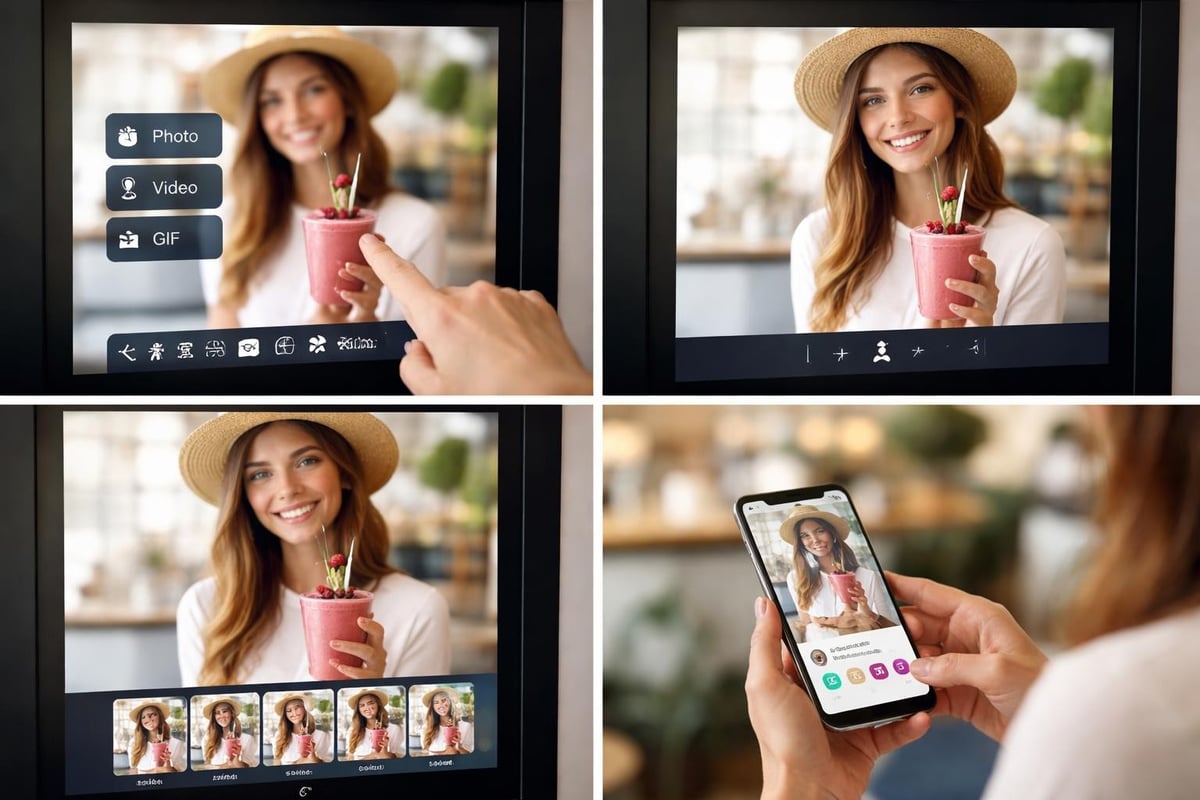
Design your digital interface with clear visual hierarchy and minimal steps between start and share. Users should understand how to begin their session within three seconds of approaching the booth.
Button sizing and spacing must accommodate various hand sizes and prevent accidental selections. Maintain touch targets of at least 44x44 pixels with adequate spacing between interactive elements. Use high-contrast colors to ensure readability in various lighting conditions common at events.
Navigation should follow familiar patterns from consumer apps. A home screen with large, clearly labeled options (Photo, GIF, Boomerang) lets guests quickly choose their preferred format. Include visual previews of each option to reduce confusion and increase engagement with premium features.
Lighting Design for Consistent Quality
Professional lighting separates amateur photo booth setups from premium experiences. The design must account for various skin tones, ambient venue lighting, and the specific qualities of your camera sensor.
Three-point lighting remains the gold standard for flattering results. Position your key light at a 45-degree angle to create dimension, add a fill light on the opposite side to soften shadows, and include a backlight to separate subjects from the backdrop. Ring lights offer a simplified alternative for compact setups, providing even, flattering illumination ideal for close-up portraits.
Color temperature consistency ensures photos maintain the same quality throughout your event. Match all light sources to the same Kelvin rating-typically 5500K daylight balanced for natural-looking results or 3200K tungsten for warmer, more intimate aesthetics.
Designing for Different Event Types
Photo booth design requirements vary significantly based on event context, audience demographics, and desired outcomes. A corporate activation demands different design priorities than a wedding celebration or university event.
Corporate Event Design Considerations
Corporate photo booth experiences prioritize brand consistency and data capture capabilities. Design elements should align with corporate identity guidelines while facilitating lead generation through integrated email capture or social media tagging.
Professional aesthetics take precedence over playful elements. Choose clean backdrops in brand colors, incorporate logo overlays with precision, and select props that enhance rather than overshadow the brand message. The interface design should feel polished and reliable, reflecting the company's professional standards.
Wedding and Private Event Design
Wedding photo booth design emphasizes personalization and romantic aesthetics. Couples increasingly request custom designs incorporating their monograms, wedding colors, and personal photography from their relationship.
Soft, flattering lighting becomes especially important for wedding applications. Design with warm color temperatures and diffused light sources that complement formal attire and makeup. The backdrop selection should harmonize with the overall wedding design while providing enough visual interest to make photos feel special rather than generic.
Consider these wedding-specific design elements:
- Elegant prop selections (vintage frames, floral crowns, classic signs)
- Romantic lighting with amber gels or soft white LED strips
- Custom overlay designs featuring wedding hashtags and dates
- Guestbook printing stations integrated into the booth design
- Coordinated color schemes matching ceremony and reception decor
User Experience and Accessibility in Photo Booth Design
Thoughtful photo booth design accounts for users of varying heights, abilities, and technical comfort levels. Modern photo booth setups should prioritize accessibility to ensure all guests can participate fully in the experience.
Height-Adjustable Design Features
Fixed-height cameras create challenges for diverse groups. Design solutions include camera mounts with quick-adjustment mechanisms or wide-angle lenses that capture full-body shots for both seated and standing guests. Position touchscreen controls between 36 and 48 inches from the floor to accommodate wheelchair users while remaining comfortable for standing operation.
Instructional Design and Wayfinding
Clear, visual instructions reduce confusion and increase throughput during busy events. Design signage using a combination of icons and minimal text to communicate the photo-taking process. Consider multi-language support for international events or diverse communities.
The best photo booth design creates an almost invisible learning curve. Guests should naturally understand where to stand, when to smile, and how to access their photos without reading extensive instructions. Photo booth etiquette guidelines suggest that well-designed booths reduce guest confusion and eliminate the need for attendant intervention.
Advanced Design Features and Innovations
The photo booth industry continues evolving with technological advances that expand creative possibilities. Staying current with emerging photo booth trends helps ensure your design remains competitive and engaging.
Augmented Reality and Digital Props
AR integration represents a significant shift in photo booth design philosophy. Rather than physical props that require storage, cleaning, and replacement, digital overlays offer unlimited creative options. Design AR elements that respond to facial recognition, allowing virtual accessories to properly scale and position on each guest.
Successful AR design requires careful consideration of processing speed and user guidance. Design the interface to provide clear previews of AR options before capture, and ensure the rendering happens quickly enough to maintain engagement.
Green Screen Technology and Virtual Backgrounds
Green screen capabilities multiply creative possibilities but require careful design implementation. The physical green backdrop must be evenly lit without shadows or wrinkles that create keying artifacts. Design the lighting independently from subject lighting to maintain clean separation.
| Virtual Background Type | Design Considerations | Best Applications |
|---|---|---|
| Branded environments | Ensure logo visibility and proper scaling | Corporate events, trade shows |
| Destination scenes | High-resolution images with appropriate perspective | Travel promotions, destination weddings |
| Animated backgrounds | Optimize file size for smooth playback | Entertainment events, youth programs |
| Seasonal themes | Library of templates for year-round relevance | Retail activations, holiday parties |
Position subjects 6-8 feet in front of the green screen to prevent color spill on clothing and skin. Design your camera angle to capture full-body shots while minimizing floor visibility, which often causes keying challenges.
Data Collection and Analytics Integration
Modern photo booth design increasingly incorporates data capture features that provide value beyond entertainment. Design the email or phone collection interface to feel like a natural part of the sharing process rather than an intrusive requirement.
Transparent data practices build trust and increase opt-in rates. Design clear privacy messaging and offer immediate value in exchange for information-instant photo delivery, exclusive content access, or contest entry.
Portable and Modular Design Strategies
The rise of DIY and self-service photo booth models demands design approaches that prioritize ease of setup and transportation. Creating modular systems that non-technical users can deploy successfully requires thoughtful component design and comprehensive documentation.
Shipping and Setup Considerations
Design booth components with protective packaging that doubles as storage between events. Each piece should include clear labeling and numbering that corresponds to setup instructions. Cable management systems prevent tangling during transport and simplify the connection process during installation.
Weight distribution affects both shipping costs and setup difficulty. Balance feature-rich functionality against practical portability by using lightweight materials where possible and consolidating heavy components into a single secure case.
Scalable Design Systems
Design booth configurations that adapt to various space constraints and event scales. A base system might serve intimate gatherings of 50 guests, while additional lighting, backdrop options, and premium digital features transform the same core equipment for large-scale activations serving thousands.
This modular philosophy extends to pricing and customization. Design package tiers that let clients select base functionality and add specialized features based on specific event requirements and budgets. Understanding photo booth rental costs and what's included helps clients make informed decisions about which design features deliver the best value for their particular needs.
Seasonal and Trending Design Adaptations
Successful photo booth design evolves with cultural moments and seasonal events. Planning ahead for predictable demand spikes lets you create specialized designs that feel timely and relevant.
Holiday-Specific Design Packages
Develop templated designs for major holidays that clients can customize with their branding. A Valentine's Day package might feature romantic red and pink overlays, heart-shaped props, and couple-focused framing. Halloween designs incorporate spooky filters, costume-friendly lighting, and themed digital backgrounds.
Production efficiency improves when you create base seasonal templates that require only minor customization for each client. Design reusable graphic elements, prop collections, and backdrop options that work across multiple events within the same season.
Trend-Responsive Design Updates
Monitor design innovations showcased at major industry events to identify emerging aesthetic trends before they reach mainstream adoption. Early implementation of new styles positions your offering as cutting-edge and attracts clients seeking contemporary experiences.
Design flexibility allows rapid adaptation to viral trends. When a particular filter style, meme format, or social media challenge gains traction, your system should accommodate quick implementation without complete redesign.
Measuring Design Success and Iteration
Effective photo booth design requires ongoing refinement based on real-world performance data. Establish clear metrics that evaluate both technical execution and guest engagement.
Key Performance Indicators for Design Evaluation
Track usage patterns to identify design friction points. If guests consistently abandon sessions at a particular step, redesign that interface element for greater clarity. Monitor average session completion times-optimal designs facilitate 30-60 second experiences from start to share.
Social sharing rates provide direct feedback on design appeal. Higher sharing percentages indicate that guests find the output visually appealing and worth broadcasting to their networks. Analyze which design elements (overlays, filters, backgrounds) correlate with increased sharing behavior.
Guest feedback offers qualitative insights that quantitative data might miss. Design post-event surveys that ask specific questions about interface clarity, aesthetic appeal, and overall satisfaction. Use this information to prioritize design improvements for future deployments.
A/B Testing Design Variations
When possible, test design alternatives simultaneously to gather comparative performance data. Deploy two different overlay designs at similar events and measure engagement rates, sharing behavior, and client satisfaction. This evidence-based approach removes guesswork from design decisions.
Document successful design patterns in a searchable library. When designing for a new client or event type, reference past configurations that achieved strong results in similar contexts. This institutional knowledge accelerates the design process while improving consistency and outcomes.
Great photo booth design combines strategic planning, aesthetic sensibility, and user-centered thinking to create memorable experiences that guests eagerly participate in and share. The design choices you make directly impact engagement rates, photo quality, and overall event success. Whether you're planning a corporate activation, wedding celebration, or brand promotion, Pixilated Photo Booth delivers professionally designed, easy-to-deploy photo booth solutions that elevate events of every size. Our modern DIY photo booth rentals ship directly to your location with everything needed to create high-quality, shareable photo experiences without the complexity of traditional setups.