360 Camera Photo Booth vs Standard Photo Booth for Events
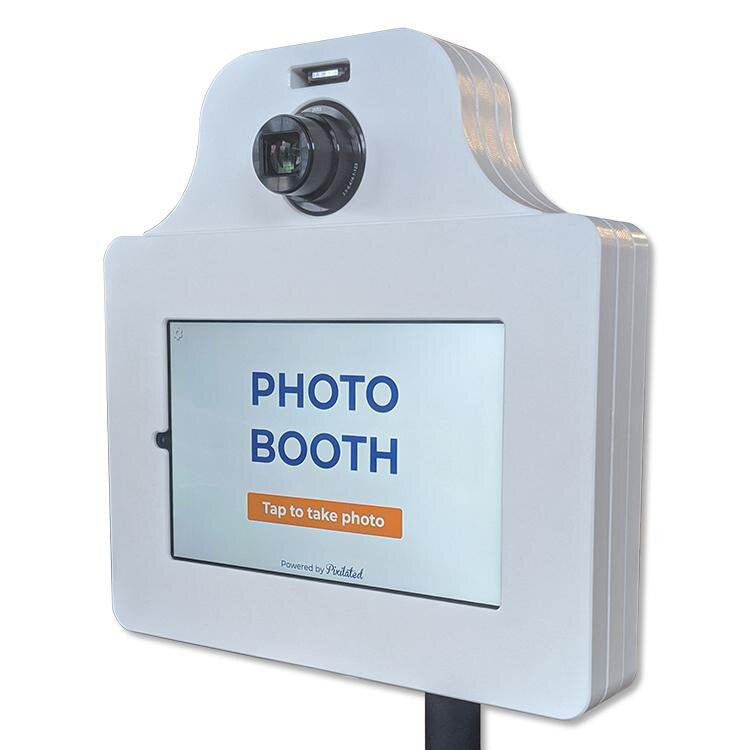
Pixilated Photo BoothA 360 camera photo booth records slow-motion video as a camera arm orbits a small group on a platform, while a standard photo booth captures stills, GIFs or short clips from a fixed position. The 360 format produces more dramatic content but demands more floor space, equipment and attention, so a standard booth is usually the more practical choice for most weddings, company parties and campus events.
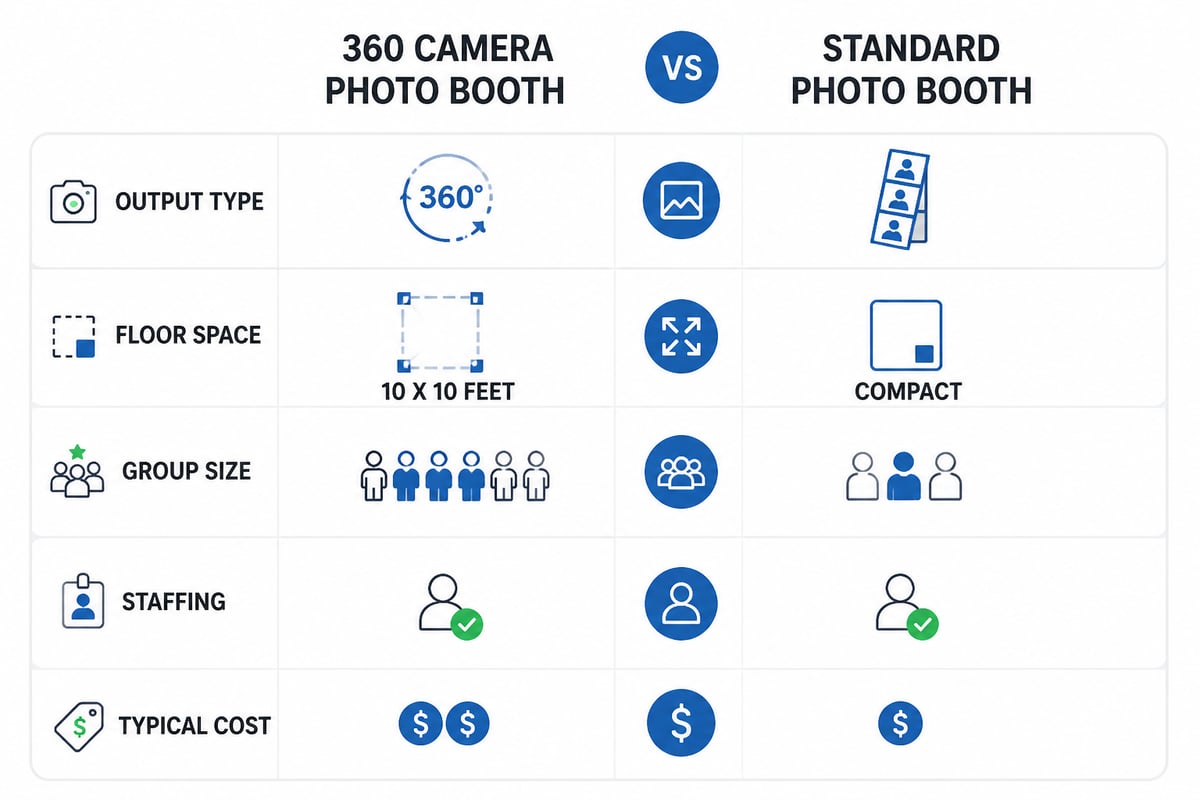
The comparison below covers the criteria that matter when you are choosing between the two formats.
Side-by-Side Comparison
The table summarizes the practical differences between the two formats. Cost figures are approximate and reflect ranges published by Snappic's 360 booth guide.
| Criterion | 360 Camera Photo Booth | Standard Photo Booth |
|---|---|---|
| Output | Slow-motion orbit video | Stills, GIFs, short clips |
| Floor space | About 10 × 10 feet of clear space | Small footprint, flexible placement |
| Group size | Usually a small group per spin | Flexible, from solo to large groups |
| Setup | Platform, arm, lighting, software | Compact kit, often a few minutes |
| Operator | Often needs someone to run the spin | Can run self-service |
| Typical rental cost | Often several hundred dollars per hour | Generally lower; varies by provider |
| Best use | Dance-floor energy, brand spectacle | Steady guest flow, keepsakes, branding |
How a 360 Camera Photo Booth Works
A 360 camera photo booth uses a platform that guests stand on while a motorized or hand-spun arm carries a camera around them, producing a smooth orbit video.
The main components are the platform, the camera arm, lighting and software that captures, edits and shares the clips. OrcaVue lists its Air platforms at 34, 39 and 46 inches in diameter, with 1,200-pound capacities, 6 to 30 RPM rotation speeds and 10+ hours of battery operation. Those specifications show how much hardware sits behind one spin.
A standard booth is far simpler. It consists of a camera, a screen or tablet, lighting and a backdrop, and guests step in front of it to take photos. The experience is familiar, which matters at events with a wide range of ages.
Cost and Budget
Cost is where the two formats diverge most sharply, particularly for buyers who consider owning equipment rather than renting.
Snappic estimates a complete 360 booth setup at $1,500 to $10,000, excluding separately sold software. Snappic also estimates rentals at roughly $199 to $599 per hour, depending on location and package, and its 360 software starts from $79 per event.
Several hardware options give a sense of the market:
- GO360BOOTH 360 Camera Booth X7 45-inch: about $1,939, with a 45-inch platform, automatic motorized spin with app control, anti-shaking design, speed control and a three-year manufacturer warranty.
- OrcaVue Air 39: about $3,352, with a 39-inch platform, 1,200-pound capacity, a 78-pound platform weight, 6 to 30 RPM and 10+ hours of battery operation.
- OrcaVue Air 34 and Air 46: 34-inch and 46-inch platforms with the same 1,200-pound capacity and 6 to 30 RPM range; the Air 34 weighs 64 pounds and the Air 46 weighs 93 pounds.
- OrcaVue XL: a 46-inch platform with a 1,500-pound capacity, a 126-pound platform weight and 8+ hours of battery operation.
- Booth King 40-inch Automatic Spin Infinity LED 360 Photo Booth: a 40-inch platform with LED lighting and 90-day access to the 360 Photo Booth App on iPhone, iPad and Android.
- Booth King 45-inch LED 360 Photo Booth Silver Package: a 45-inch LED platform with the app included and 90-day app access.
- Snappic 360 Photo Booth Software: from $79 per event, works with any spinner brand and captures, edits and shares 360 videos.
For couples and event planners who only need a booth for one date, buying is rarely sensible. A rental, or a self-service kit, avoids storage, insurance and maintenance. For a breakdown of typical pricing, see this overview of photo booth rental prices.
Space and Logistics
Space is the criterion that most often rules out a 360 camera photo booth, because the platform and rotating arm need a clear, level zone around them.
Snappic notes that a 360 booth typically needs at least 10 × 10 feet of clear floor space for the platform, camera-arm rotation and a safety buffer. That is a significant share of a small reception room, a hotel ballroom corner or a crowded campus student center.
Standard booths are easier to place. A backdrop and a camera stand can fit against a wall, near an entrance or beside a lounge area. Battery-powered setups remove the need for outlets and cords, which reduces trip hazards in busy rooms.
Also consider load-in. Larger 360 platforms can weigh more than 60 pounds, so moving and positioning them takes planning and often more than one person.
Guest Experience and Throughput
A 360 spin is a performance, while a standard booth is a steady stream of quick sessions, and that difference affects how many guests actually participate.
A 360 camera photo booth works well when you want a crowd gathered around a moment. Guests pose in small groups, others watch and the resulting video is eye-catching. The trade-off is time: each spin involves stepping on, positioning, recording and often waiting for processing. During a 150-person reception, a queue can form quickly.
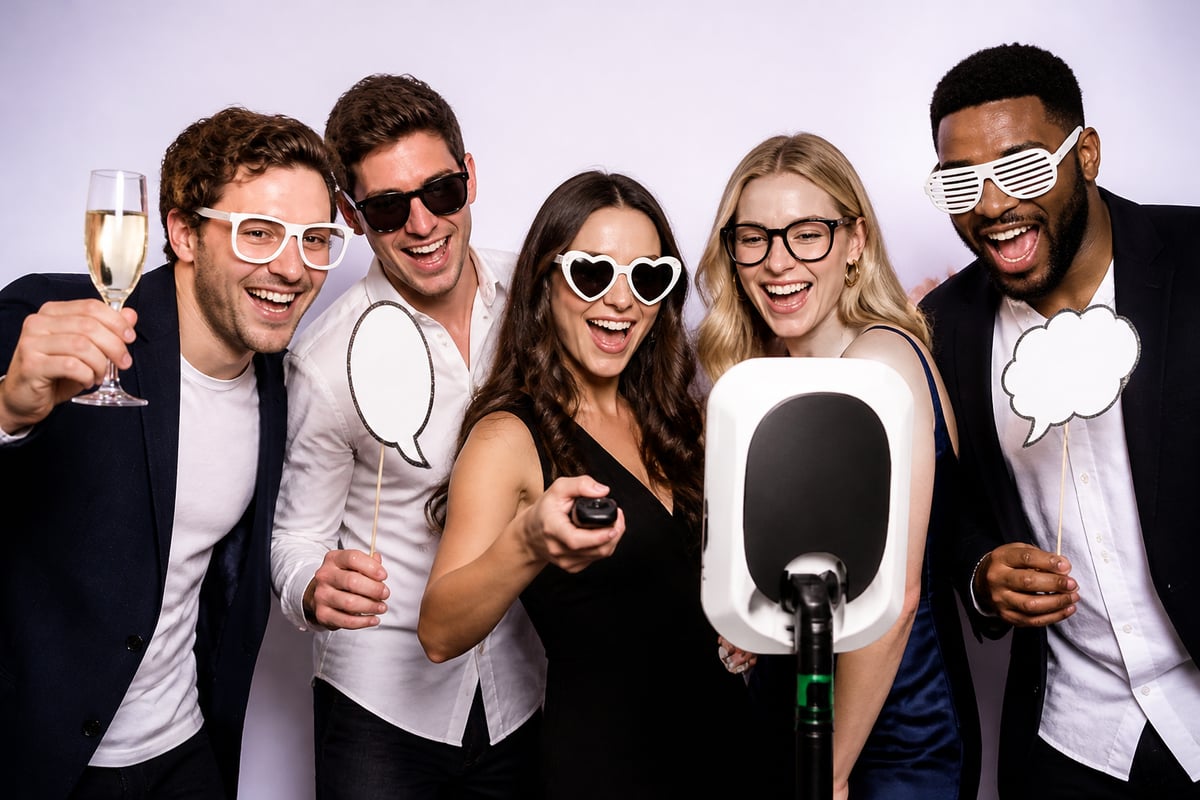
A standard booth handles volume better. Guests can take photos in under a minute, groups of any size can fit in frame and quiet guests who dislike performing in front of a crowd can participate privately. For events where inclusion matters, such as a wedding with guests of several generations, this is a real advantage.
Sharing and Content Quality
Both formats can deliver shareable content, but they suit different social habits.
360 videos are made for short-form platforms. The slow-motion orbit looks distinctive in a feed, which is why brands like it for launches and activations. Files are larger, though, and the clips sometimes need editing or upload time before guests can post them.
Standard booth output is simpler to deliver. Pixilated Photo Booth sends photos by text and email and provides an online gallery of all photos, so guests receive their images without hunting for a link. A GIF photo booth adds motion without the space demands of a spinner.

Staffing and Technical Risk
A 360 booth usually performs best with someone managing it, which sets it apart from a self-service booth that guests operate alone.
Spin speed, camera framing, lighting and software all need monitoring. A platform that is off level, a drifting arm or a failed upload can interrupt the experience, and guests are rarely equipped to fix these problems. If you want the 360 format, expect to rely on an operator or a team member who has practiced beforehand.
A self-service booth removes that dependency. Pixilated Photo Booth kits set up in about five minutes with no tech skills needed, so a wedding party member, an office coordinator or a student volunteer can handle them. Readers who specifically want a staffed operator are better served by a traditional full-service vendor, since Pixilated's model is self-service. For general equipment considerations, this photo booth equipment guide outlines camera, lens, lighting and software choices.
Branding and Customization
Branding opportunities differ in what they emphasize: a 360 booth brands the moment, while a standard booth brands the frame, screen and backdrop.
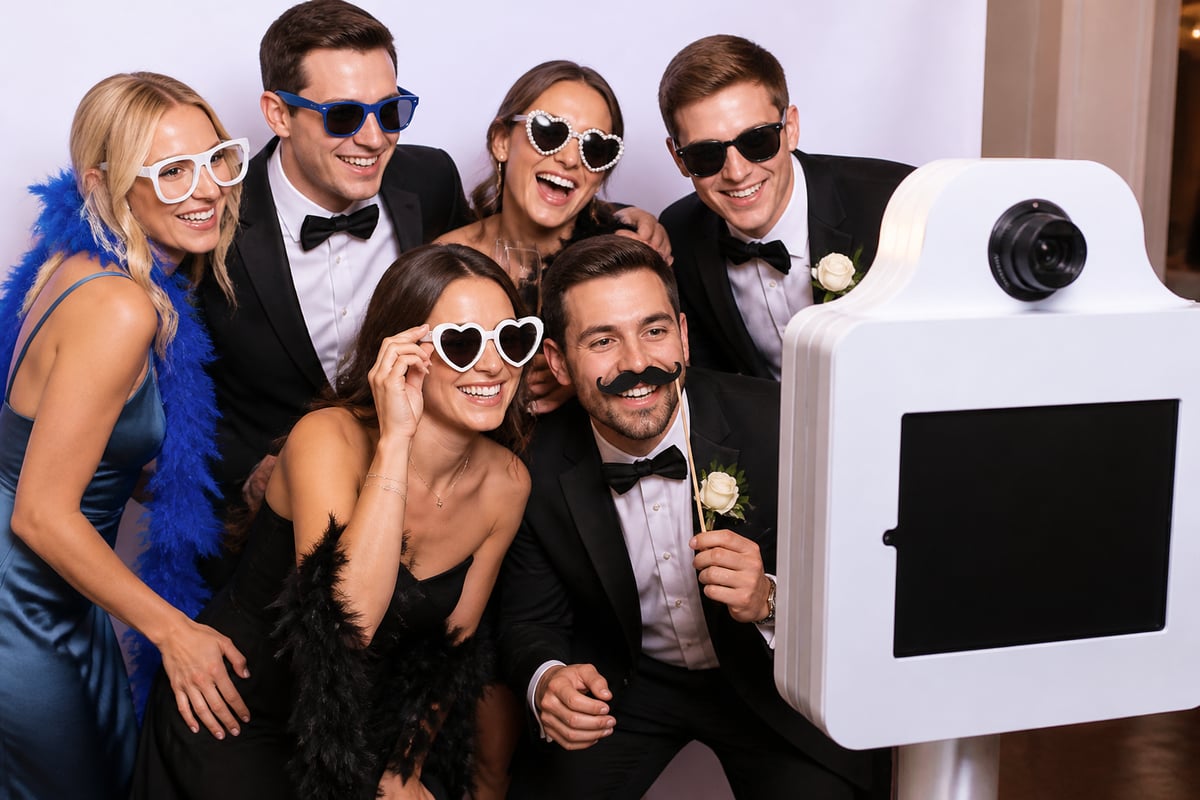
On a standard booth, your logo, colors and theme can appear on every photo frame, on the screen and on the backdrop. That matters for a company holding a client event or a couple who wants monograms on every image. Pixilated offers customizable frames, screens and backdrops, and its customized design option lets you add a logo or text to match your theme.
360 booths can be branded through LED lighting, platform styling and overlays on the video, but the branded surface is smaller and often depends on the software you use.
Which Format Suits Which Event
The right choice follows the event's size, space and goals rather than the novelty of the technology.
Weddings
Couples with a large dance floor and a budget for an operator may enjoy a 360 spin as a late-night highlight. Most couples, however, want every guest to leave with a keepsake, which favors a standard booth. A wedding photo booth rental with custom frames and printable props suits receptions where the booth sits quietly beside the cocktail hour or the dance floor.
Corporate events
HR teams and event planners usually need broad participation, clean branding and minimal on-site support. A corporate event photo booth rental with a branded frame and instant sharing meets that need. A 360 platform can add spectacle at a product launch or a client reception, provided the floor plan allows the 10 × 10 foot footprint.
Campus events
Graduations, orientations and student mixers draw high volume and tight budgets. A self-service booth that students can run themselves, without an operator, fits these constraints. For more planning ideas, see these photo booth ideas for college and university events.
Where Pixilated Photo Booth Fits
Pixilated Photo Booth is a self-service standard booth, not a 360 platform, and it fits hosts who want simple setup, branded output and no operator.
The Pixilated Photo Booth kit is battery powered, so there are no cords to trip over, and it ships with free roundtrip UPS shipping, with the kit guaranteed to arrive at least one day before your event. It is rated 4.9/5 by more than 10,000 event hosts and has hosted over 10,000 events. For current pricing and kit details, see the product pages or contact Pixilated directly.
How to Decide in Five Steps
Use this short sequence to settle the question before you book anything:
- Measure the room. If you cannot clear about 10 × 10 feet, a 360 platform is not practical.
- Estimate guest volume. Larger crowds favor the faster throughput of a standard booth.
- Decide who runs it. If nobody can supervise a spinner, choose a self-service format.
- Weigh the budget. Compare hourly 360 rental rates against a flat kit rental.
- Define the keepsake. Prints, galleries and branded frames favor a standard booth; short-form video favors a 360 spin.
Verdict
Choose a 360 camera photo booth if you have open floor space, a trained operator and an event built around spectacle, such as a product launch or a late-night dance floor moment. Choose a standard self-service booth if you want every guest to take part, need branded photos and a shareable gallery, and prefer a setup that one coordinator, couple or student group can manage alone.
Start by measuring the area where the booth would sit and counting your expected guests, since those two numbers settle most of this decision. If a self-service, customizable photo booth sounds like the better fit, review the Pixilated Photo Booth kit and its branding options, then book my photo booth now so your event is covered with a kit that arrives at least a day early.